Elon Musk called it an “abomination” — but the Big Beautiful Bill might be crypto’s backdoor stimulus
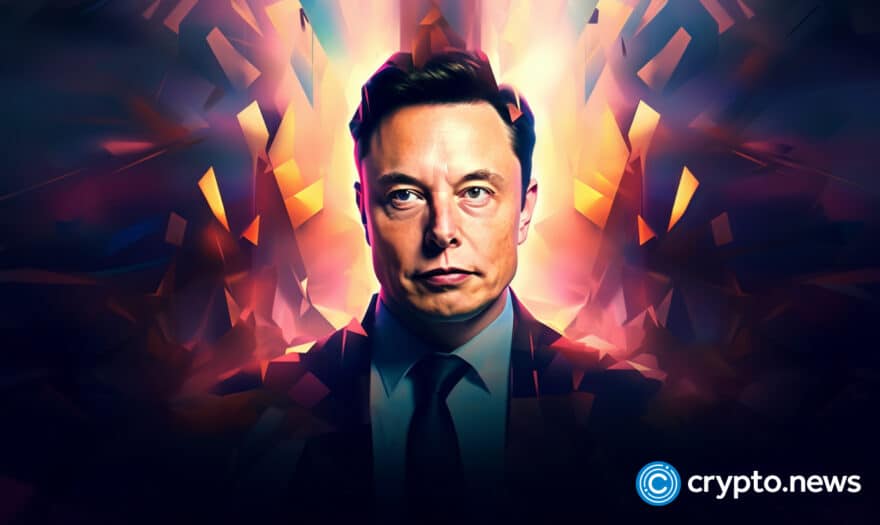
What made Elon Musk call Trump’s “Big Beautiful Bill†a disgusting abomination and what does this mean for crypto’s future in America?
Table of Contents
Musk calls Big Beautiful Bill a disgusting abomination in viral attack
The One Big Beautiful Bill Act, or OBBBA, is a sweeping tax and spending proposal introduced by the Donald Trump administration that narrowly passed the House in late May 2025.
Stretching over a thousand pages, the bill expands on the 2017 tax cuts by extending existing provisions and introducing new ones. Among the most notable are zero taxes on tipped wages and full, immediate deductions for business investments.
Alongside the tax measures, the bill increases spending in areas such as military programs and border infrastructure. This includes funding for a new missile defense system labeled the “Golden Dome.â€
To support the scope of these changes, the proposal raises the national debt ceiling by $4 trillion and calls for cuts across several federal programs. Medicaid, food assistance, and other support services face reduced budgets and new eligibility restrictions, including work requirements.
The Congressional Budget Office projects that, if passed without major changes, the legislation could raise the national debt from roughly $36 trillion to nearly $40 trillion over the next ten years.
The bill has already sparked internal debate within the Republican party. Several senators have voiced concern about the long-term cost of the tax breaks and the impact of expanding the deficit.
Elon Musk, who briefly held a position in the Trump administration as head of the Department of Government Efficiency, has since become one of the bill’s most outspoken critics.
Soon after stepping down, Musk posted on X, calling the proposal “a disgusting abomination†and accusing Republican lawmakers of fiscal dishonesty. He followed up by stating, “You know you did wrong. You know it,†in direct reference to those who voted for the bill.
Musk, who reportedly donated nearly $300 million to support Trump and other Republican candidates, has now accused them of betraying their base. In his words,Â
House Speaker Mike Johnson responded by defending the bill and challenging Musk’s statements. “My friend Elon is terribly wrong about this bill,†he said, describing it as a long-term investment in American competitiveness.
Senate Minority Leader Chuck Schumer offered criticism from the other side of the aisle, calling the bill “ugly to its very core†and describing it as a $4.5 trillion gift to the ultra-wealthy, funded by cuts to health care and social support for working families.
The legislation now moves to the Senate, where Republicans hold a 53 to 47 majority. Given the level of pushback from both within the party and across the aisle, substantial revisions are expected before any version can move forward.
So what does all of this mean for the digital asset space? Let’s break down what’s actually in it and how it could shape the future of crypto.
Musk blasts Big Beautiful Bill but crypto firms may benefit
Although the OBBBA does not mention crypto directly, several provisions within the bill could influence how the industry functions in practice.
One of the most immediate impacts comes from the return of full bonus depreciation for capital investments, allowing businesses to deduct the entire cost of qualifying equipment in the year of purchase.
For crypto mining firms, a newly bought mining rig could be written off in full rather than depreciated over time. Tax professionals note that such deductions can help miners generate paper losses to offset other income, significantly lowering their tax burden.Â
Since profitability in mining often depends on managing costs, the provision could offer direct financial relief.
The bill also retains the corporate and individual tax rates introduced in 2017. A steady 21% corporate tax rate may benefit blockchain startups by preserving more capital for development and hiring.
Not all elements of the proposal are favorable to the sector.
Section 112105 introduces a 5% excise tax on most cross-border remittances. Every time an individual in the U.S. sends money abroad, 5% of the amount would be collected by the Treasury unless the sender uses a “qualified†provider that verifies them as a U.S. national or citizen.
For many lawful immigrants and visa workers, who frequently send funds to family overseas, the requirement could present significant friction. Advocacy groups estimate that over 40 million U.S. residents could be affected.Â
Countries such as Mexico, which rely heavily on remittance inflows, have already raised concerns, warning that the measure could divert billions away from their economies.
Within crypto circles, the implications are layered. The added cost of traditional remittances may drive users toward stablecoin-based alternatives, including USD Coin (USDC) and Bitcoin (BTC), which enable borderless value transfer without relying on banks or remittance companies.
A noticeable shift toward crypto for remittances could also invite regulatory scrutiny. If policymakers see digital assets as tools to bypass taxation, they may increase oversight of wallet providers and exchange on-ramps.
Coin Center has already described the measure as a form of financial surveillance, drawing parallels to past proposals aimed at tracking self-custodied crypto activity.
Why Section 899 makes the Elon Musk tweet feel eerily prophetic
Tucked deep within the OBBBA is Section 899, a provision that grants the U.S. Treasury new powers to retaliate against foreign tax policies deemed unfair to American businesses or individuals.
If another country enacts a tax that disproportionately impacts U.S. entities, the Treasury can officially label it a “Discriminatory Foreign Country.†That designation allows the U.S. to impose elevated taxes on companies or citizens from that country doing business on American soil.
The immediate targets include digital services taxes and global minimum tax policies promoted by the OECD. Several countries, including France, Italy, and the United Kingdom, have already implemented tax regimes that largely affect U.S. tech giants. Section 899 gives the U.S. a legal path to push back.
For the crypto industry, the implications are multi-dimensional. Foreign regulators weighing taxes on U.S.-based crypto firms may now think twice. A transaction levy on platforms like Coinbase or Circle that favors local players could trigger a retaliatory response from the U.S. That deterrent effect could help American crypto firms preserve access to global markets.Â
The provision also reinforces the U.S. position against the OECD’s global minimum tax plan. Without a top-up tax enforced through bilateral treaties, American crypto startups remain under domestic tax rules, even when earning abroad.
That separation benefits smaller blockchain firms. It avoids layering foreign tax obligations onto early-stage companies still navigating compliance at home. For now, Section 899 signals that the U.S. won’t allow other nations to expand their tax reach over American income.
The risks are equally clear. If the U.S. raises taxes on foreign firms in response to digital service levies, affected countries may respond in kind. Crypto companies entering Europe or Asia could face higher withholding taxes, stricter licensing, or added legal friction.
That escalation threatens the global reach many crypto projects rely on. Distributed teams, international investors, and cross-border liquidity are core to the industry.Â
Moreover, a fragmented tax environment could slow growth, raise compliance costs, and weaken international partnerships.
Foreign venture capital may also pull back. A fund based in a targeted country could face higher taxes when investing in U.S. crypto startups, making deals more expensive and potentially slowing capital flow.
On the ground, U.S.-based exchanges and funds might be required to flag, report, or withhold more from investors tied to blacklisted countries. That added complexity raises operational overhead and could deter global user participation.
The full impact of the measure will likely depend on how aggressively both sides respond, and whether exemptions or negotiated frameworks emerge in response to mounting pressure.
The congressional spending bill feels like 2020 all over again
One of the broader effects of the OBBBA may surface through its influence on inflation expectations. Large-scale tax cuts and shifts in spending, especially when financed through borrowing, often raise concerns about long-term price stability.
The bill includes reductions in some federal programs, but many economists argue that its immediate impact is stimulative. Unfunded tax relief can temporarily boost demand, and without offsetting growth or revenue, that may contribute to rising inflation over time.
The Committee for a Responsible Federal Budget has warned that the bill moves the U.S. further from achieving a sustainable debt-to-GDP ratio. Its analysis suggests that maintaining a 3% deficit target would be nearly impossible under the bill’s current framework.
Ongoing borrowing to fund tax cuts and military expansion could gradually weaken the dollar’s purchasing power. If those expectations gain traction, Bitcoin may re-emerge as a hedge against inflation risk.
If the electorate doesn’t hold congress accountable to reducing the deficit, and start paying down the debt, Bitcoin is going to take over as reserve currency.
I love Bitcoin, but a strong America is also super important for the world. We need to get our finances under control. https://t.co/aeBE7pUuHo
— Brian Armstrong (@brian_armstrong) June 4, 2025
The pattern has precedent. During the pandemic stimulus era of 2020 and 2021, Bitcoin experienced a surge in demand as investors responded to aggressive monetary and fiscal expansion. That cycle pushed Bitcoin above $60,000 by early 2021.
A similar dynamic appears to be forming in 2025. Bitcoin surpassed $111,000 in May shortly after the House approved the OBBBA, even though inflation readings remain moderate. Market behavior suggests that investors are pricing in anticipated risks, rather than reacting solely to current indicators.
Still, the relationship between inflation and crypto markets is not linear. When inflation accelerates and central banks raise interest rates sharply in response, crypto tends to come under pressure. In 2022, Bitcoin lost more than 50% of its value as the Federal Reserve pursued rapid rate hikes to contain inflation.
Higher interest rates boost returns on traditional assets like Treasury bonds, making them more appealing relative to volatile holdings such as cryptocurrencies. In these conditions, institutional capital often exits the crypto market in search of more stable yields.
Household behavior may also shift. Rising costs for essentials like fuel and food can limit discretionary spending. Retail investors, who represent a substantial portion of crypto participants, may reduce their exposure during inflationary stress, leading to lower trading volumes and muted price action.
Volatile inflation also complicates the use of crypto as a payment method. When purchasing power is uncertain, holders of Bitcoin and similar assets may prefer to save rather than spend, weakening their utility as mediums of exchange.
For crypto markets, inflation signals can push in both directions. Moderate inflation, paired with declining trust in fiat stability, often supports Bitcoin. Sudden spikes that trigger monetary tightening tend to reverse that effect.
What OBBBA adds to the equation is a larger scale and a more visible fiscal footprint — something investors, both in and outside of crypto, are now recalibrating for.
披露:本文不代表投资建议。本页内容和材料仅供教育之用。
在波动中,Ripple 的 XRP 交易价格为 2.29 美元,而 Rexas Finance 则飙升,预计涨幅达 14,700%。
目录XRP 的现状XRP 能飙升 500% 吗?Rexas Finance:现实世界资产代币化的后起之秀为什么投资者选择 RXS 而不是 XRP最后的想法:XRP 还是 RXS?
Ripple 的 XRP 价格波动最近成为全球讨论的焦点。目前其交易价格约为 2.29 美元,这让许多人开始思考,XRP 是否会上涨 500%,或者 XRP 是否会因下跌 50% 而面临可怕的后果。Â Â Â
Ripple 并不是唯一受到关注的加密货币 —— 加密货币市场的最新成员 Rexas Finance (RXS) 正在迅速崛起,其表现优于 XRP,预计从目前的 0.2 美元水平上涨 14,700%。
阅读更多:为什么 XRP 将在 2025 年暴涨,但 0.20 美元的 Rexas Finance 仍可能挑战它
XRP 的现状
过去几个月里,Ripple 的 XRP 价格走势一直难以预测。两个月前,它的价值达到了最高值 3.02 美元,但随后急剧下跌至 2.19 美元。正如许多投机者指出的那样,这种价值下跌只会加强他们对加密货币市场波动性的信念。可以看出,XRP 正在遵循经典的繁荣与萧条周期。
能够解释 XRP 价值的最大原因之一是 Ripple 正在对美国证券交易委员会 (SEC) 提起诉讼。经过多年的诉讼,每次诉讼中做出的判决都会影响 XRP 的价值。如果 Ripple 做出有利的裁决,投资者的乐观情绪可能会激增,从而导致价格上涨。但相反,Ripple 可能会亏损,从而引发抛售,这可能会导致 XRP 价格下跌 50% 或更多。
XRP 能飙升 500% 吗?
对于市场专家来说,XRP 的未来已经变得两极分化。一些分析师认为,如果 XRP 被广泛用于银行业务,并且法律纠纷以有利于 Ripple 的方式解决,到 2030 年,其价格可能会升至 4.98 美元和 15.65 美元。这种涨幅将比目前的水平高出 500%。尽管如此,XRP 的增长潜力仍与其他加密货币相媲美,即使它具有出色的潜力。Rexas Finance 似乎是一个引人注目的投资选择,已经显示出在 2025 年超越 XRP 的迹象。
Rexas Finance:现实世界资产代币化的后起之秀
Rexas Finance 正在快速发展,而 XRP 的法律问题可能会减缓其扩张速度。作为领先的现实世界资产 (RWA) 代币化平台,RXS 的定位是让客户能够将房地产、黄金和艺术品等资产数字化。
Rexas Finance 最初售价为 0.030 美元,较其预售第 12 阶段的 0.20 美元价格上涨了 566%,令人震惊。预售共售出 457,644,481 枚 RXS 代币,筹集了超过 4750 万美元。投资者争相抢购 RXS,以免其于 2025 年 6 月 19 日以 0.25 美元的价格上市,预售已售出 91.54%。
分析师估计,RXS 可能会在 2025 年第四季度之前飙升至 29.4 美元,根据其出色的走势,其预售价格将上涨 14,700%。对于早期投资者来说,RXS 是一个诱人的前景,因为这种指数级扩张超过了 XRP 可能上涨的 500%。
为什么投资者选择 RXS 而不是 XRP
明显的增长潜力: Unlike XRP, which is entangled in legal uncertainties, Rexas Finance has a defined roadmap and a rapidly expanding ecosystem. RXS is backed by real-world assets, giving it intrinsic value beyond speculation.
Certik 安全审核: 安全是投资者最关心的问题。Certik 已对 Rexas Finance 进行了审计,以确保该平台符合行业安全标准。
社区驱动的方法: 与因过于中心化而受到负面反馈的 XRP 不同,Rexas Finance 采用去中心化的方式,不接受风险投资家的资金。这样,主导权就掌握在散户投资者手中。
CoinMarketCap 和 CoinGecko 列表: Now that RXS is listed on CoinMarketCap and CoinGecko, its credibility has increased, and investors can easily monitor its performance.Â
Rexas Finance organized a $1 million giveaway to honor its successful presale. Twenty winners will receive RXS valued at $50,000 each. The contest has attracted 1,735,451 entries thus far, with investors hurrying to raise their chances of winning by finishing official website promotional tasks.
Final Thoughts: XRP or RXS?
Even though XRP has an incredibly bright future, its legal consultations and bank adoption will be crucial in determining it. Its performance is still good; however, compared to pioneers like Rexas Finance, XRP finds itself at a disadvantage, particularly following RXS’ recent 500% increase in value. By enabling real-world assets via blockchain technology, Rexas Finance is transforming asset ownership.Â
Investors who act now stand to benefit much before the RXS coin launches for $0.25 on June 19, 2025, with an almost perfect presale. In the 2025 XRP versus RXS race, Rexas Finance could be a more profitable option for people looking for exponential returns. For investors looking for the next significant crypto investment, RXS could be the breakthrough they’ve been waiting for, as it shows the potential to rise 14,700%.
For more information about Rexas Finance, visit the website, giveaway, X, or Telegram.
阅读更多:在 Cardano、Rexas Finance 上获利:人工智能预测牛市高峰前的退出点
披露:本内容由第三方提供。crypto.news 不认可本页提及的任何产品。用户在采取与该公司相关的任何行动之前,必须自行进行研究。
受一系列交易所上市的推动,全链流动性基础设施协议 StakeStone 上涨了 20%。
币安钱包最近宣布将于今天(UTC 时间)上午 08:00 至上午 08:30 举行代币生成活动,此后 StakeStone (STO) 成为众人关注的焦点。
继 TGE 之后,多家交易所上线了该代币的现货交易。MEXC 刚刚推出了 STO 和 Airdrop+ 活动,总奖池为 130,000 USDT。该活动已经开始,将于 4 月 13 日结束。Bitget 和 Kucoin 紧随其后,Kukoin 也为该代币推出了两项促销活动,总奖池为 25,000 美元,将同时进行至 4 月 10 日。
In addition to spot listing, StakeStone was launched on Binance Alpha. BingX also launched STO staking event on its Launchpool, allowing users to stake Tether (USDT) or Bitcoin (BTC) to earn a share of 400,000 STO tokens for free. New users also eligible for an extra $120 Futures Bonus Voucher. The staking period run will run until April 6.
根据 CryptoRank.io 的数据,随着这些发展,截至发稿时,STO 飙升至 0.06 美元,较币安钱包最初的 DEX 发行价 0.02 美元上涨了 200%。
你可能还喜欢:币安钱包将举办第八届 TGE,推出 StakeStone
StakeStone 于 2023 年 7 月开始开发,并启动了测试网。同年 9 月,它启动了主网。到 2023 年底,它的总锁定价值达到 290K ETH(约 6.45 亿美元),成为链上第五大 stETH 持有者,并在与超过 100 个协议集成的同时吸纳了超过 93,000 名用户。
2024 年 11 月,StakeStone 推出了 SBTC 和 STONEBTC 产品,并完成了由 Polychain Capital 领投的 A 轮融资。2024 年 12 月,它在 Berachain (BERA) 上推出了预存 DeFi 保险库,面向散户用户,并与 Lido 和 P2P.org 建立了重要合作伙伴关系。
This year, the project also introduced LiquidityPad, enabling users to access exclusive opportunities and earn token rewards by providing liquidity to a wide range of cross-chain apps and ecosystems.
据StakeStone官网消息,代币分配和归属计划即将公布。
你可能还喜欢:BingX Labs 向 StakeStone 投资 1000 万美元,以扩大流动性质押

 83
83

 浏览量29
浏览量29